
Improve air circulation
Increase comfort
Reduce cooling costs
Support air conditioning systems
- Lower electricity bills
- Forward rotation
- Reverse rotation
Several factors determine fan performance.
Air Delivery
Air delivery measures how much air the fan circulates.
Higher airflow generally means:
- Better cooling
- Improved ventilation
- Greater comfort
Always compare airflow ratings when evaluating different models.
- Better durability
- Quiet operation
- Improved efficiency
- Consistent performance
Copper motors are commonly preferred for reliability.
Blade Design
Blade design directly affects airflow.
Factors include:
- Number of blades
- Blade angle
- Blade length
- Blade material
Noise Level
A quiet is important for:
- Bedrooms
- Home offices
- Study rooms
- Living rooms
- Bedrooms
- Dining areas
- Reduced operating costs
- Better sustainability
- Long-term savings
Smart
Modern smart fans include:
- Wi-Fi connectivity
- Voice control
- Mobile app integration
Useful for smart homes.
Popular in:
- Modern homes
- Luxury interiors
- Designer spaces
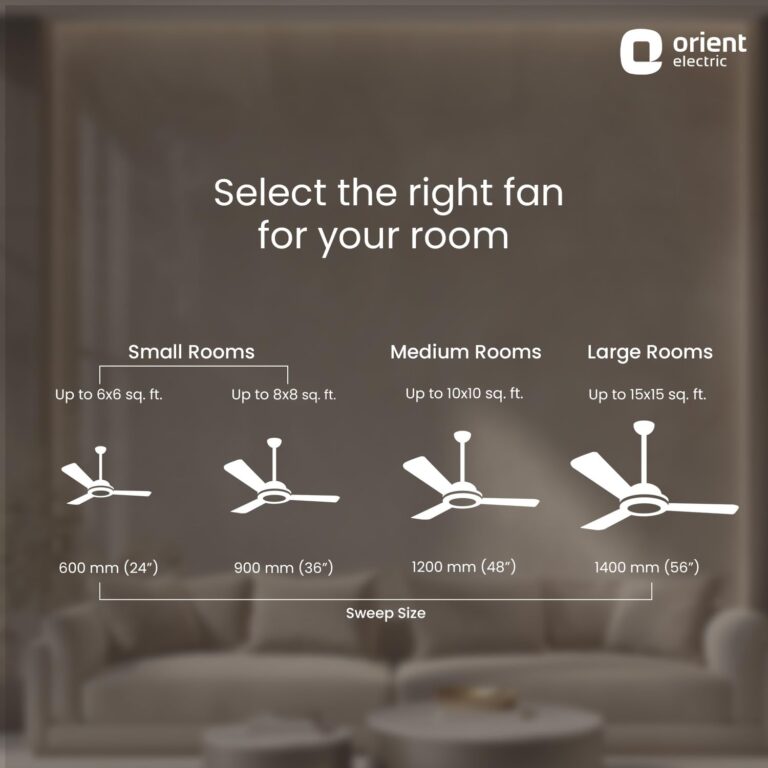
Small Rooms
Recommended fan size:
- 29 to 36 inches
Examples:
- Bathrooms
- Small offices
Medium Rooms
Recommended fan size:
- 36 to 42 inches
Examples:
- Bedrooms
- Study rooms
Large Rooms
Recommended fan size:
- 44 to 54 inches
Examples:
- Living rooms
- Family rooms
Extra Large Rooms
Recommended fan size:
- 56 inches or larger
Examples:
Large halls
Open floor plans
Best Features to Consider
Multiple Speed Settings
Variable speed controls allow customized comfort.
Benefits:
- Improved efficiency
- Better airflow control
- Enhanced convenience
Remote Control
Remote operation adds convenience.
Useful for:
- Bedrooms
- Large rooms
- Elderly users
LED Lighting
Many include integrated lights.
Advantages:
- Space-saving design
- Improved room lighting
Reversible Motor
A reversible motor allows seasonal operation.
Summer Mode
Pushes air downward.
Winter Mode
Bedroom
- Quiet operation
- Remote control
Living Room
Look for:
- Strong airflow
- Larger blade span
- Stylish design
Kitchen
Prioritize:
- Easy cleaning
- Moisture resistance
- Compact size
Home Office
Recommended features:
- Silent motor
- Adjustable speeds
- Efficient airflow
Advantages
- Whole-room coverage
- Permanent installation
- Better airflow distribution
Table Fan Advantages
- Portability
- Targeted airflow
- Lower initial cost
Advantages:
- Lower energy use
- Lower maintenance costs
- Affordable operation
Advantages:
Strong cooling performance
Actual temperature reduction
Common Mistakes When Buying a Ceiling Fan
An oversized or undersized fan may reduce efficiency.
Ignoring Ceiling Height
Ceiling height affects airflow performance.
Focusing Only on Appearance
A beautiful fan should also provide adequate airflow and efficiency.
Overlooking Energy Consumption
Loose components may cause:
- Noise
- Wobbling
- Reduced efficiency
Inspect Blade Balance
- Motor overheats
- Excessive noise develops
- Airflow becomes weak
- Fan wobbles significantly
- Repairs become frequent
Use with natural ventilation when possible.
Use appropriate speed settings.
What is the best ceiling fan size for a bedroom?
Most bedrooms work well with ceiling fans between 36 and 52 inches, depending on room dimensions.
Are ceiling fans energy-efficient?
Yes. Ceiling fans consume far less electricity than air conditioners and can help reduce cooling costs.
How often should I clean my ceiling fan?
Cleaning every two to four weeks helps maintain airflow and efficiency.
Can ceiling fans be used in winter?
Yes. Fans with reversible motors can circulate warm air during colder months.