
Finding the best sunscreen for daily use is arguably the single most impactful step you can take for your long-term skin health. Whether it is a bright summer afternoon or a cloudy winter morning, ultraviolet (UV) radiation constantly interacts with your skin. While many people associate sunscreen solely with beach trips or tropical vacations, dermatologists universally agree that daily protection is essential for preventing premature aging, hyperpigmentation, and serious skin damage.
However, walking down the skincare aisle can feel overwhelming. With hundreds of formulas boasting high SPF numbers, water resistance, mineral filters, and chemical actives, selecting the right product requires clarity. This comprehensive guide breaks down everything you need to know to pick the best sunscreen for daily use, tailor it to your unique skin type, and seamlessly integrate it into your morning routine.
Why Daily Sunscreen Is Essential
Many people mistakenly believe that sun protection is only necessary when actively sunbathing or spending extended hours outdoors. In reality, ultraviolet radiation reaches your skin every single day, even through windows and cloud cover.
According to American Academy of Dermatology guidance, sun exposure is responsible for up to $80\%$ of visible facial aging signs, including fine lines, deep wrinkles, loss of elasticity, and uneven skin tone.
+———————————————————————–+
| SUN EXPOSURE IMPACT |
+———————————————————————–+
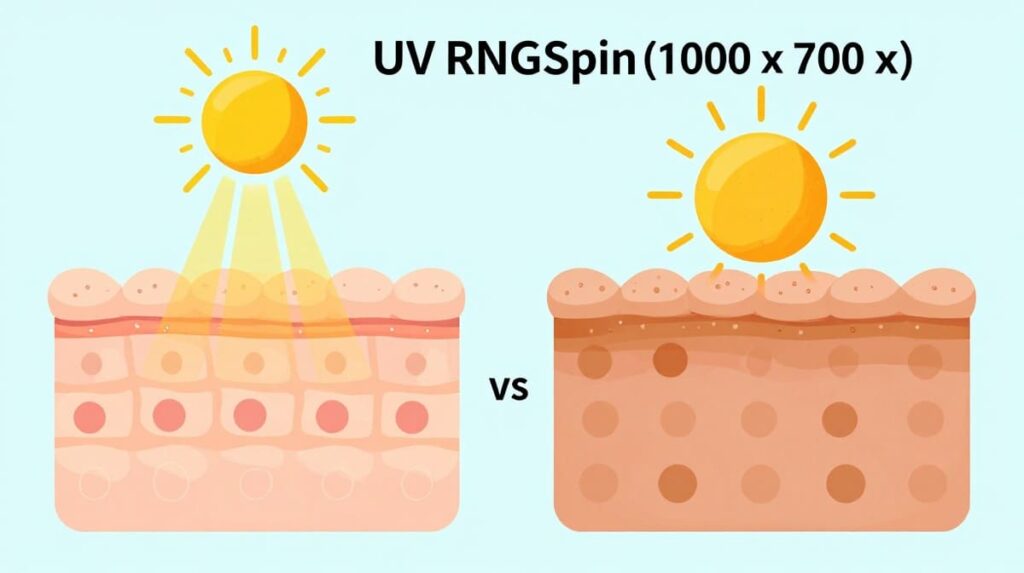
| UVA Rays (Aging) –> Deep Dermis Penetration –> Wrinkles & Sagging |
| UVB Rays (Burning) –> Epidermis Penetration –> Sunburns & Spots |
+———————————————————————–+
There are two primary types of ultraviolet rays that affect your skin:
- UVA Rays (Aging): These long-wavelength rays penetrate deep into the dermis, damaging collagen and elastin. UVA rays are constant throughout the year, can pass through glass, and do not cause immediate sunburn, making their damage insidious over time.
- UVB Rays (Burning): These shorter-wavelength rays target the outermost layer of the skin (the epidermis). They cause sunburns, surface discoloration, and direct cellular DNA damage.
Using the best sunscreen for daily use creates a protective shield against both UVA and UVB rays, preventing cumulative damage before it starts. Furthermore, incorporating daily sun care protects against environmental stressors and complements other active products in your morning skincare routine.
Image Details: File: daily-sunscreen-benefits.webp | Dimensions: 1000×700 (10:7) | Alt: Benefits of wearing sunscreen every day AI Prompt: Create an educational illustration (1000 × 700 px, 10:7 aspect ratio) showing UV rays reaching skin with and without sunscreen protection. Include healthy skin vs sun-damaged skin comparison, modern infographic style, clean medical colors.
Understanding SPF: What Do the Numbers Really Mean?
SPF stands for Sun Protection Factor. It specifically measures how well a sunscreen protects your skin against UVB radiation. A common misconception is that SPF indicates the length of time you can stay in the sun without burning; in reality, SPF reflects the relative fraction of sunburn-producing UV rays that reach your skin.
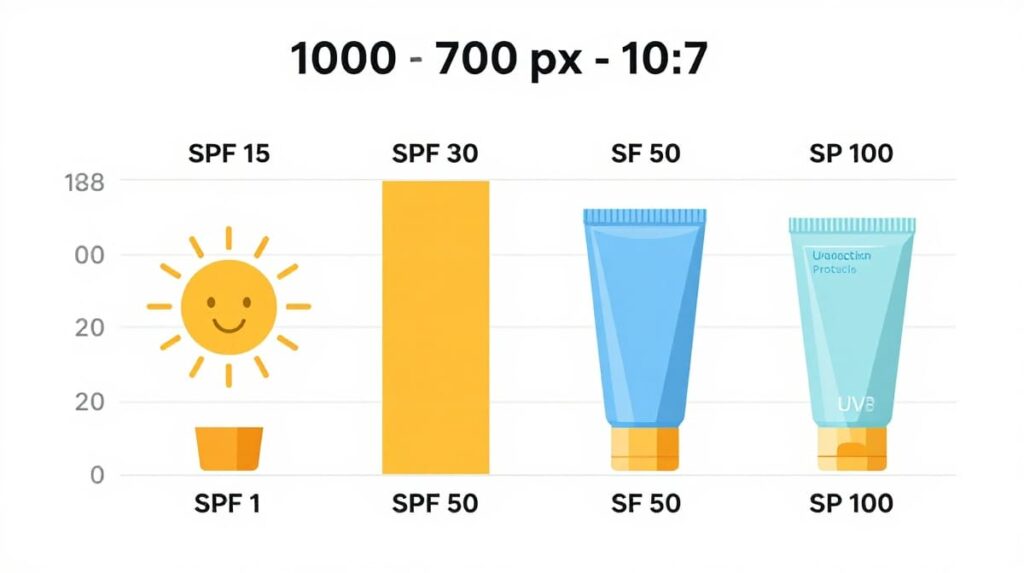
Here is how common SPF ratings stack up in terms of UVB ray filtration:
| SPF Level | UVB Rays Blocked | Rays Reaching Skin | Recommended Usage |
| SPF 15 | $93\%$ | $7\%$ | Minimal indoor exposure |
| SPF 30 | $97\%$ | $3\%$ | Daily general protection |
| SPF 50 | $98\%$ | $2\%$ | Outdoor activities & bright days |
| SPF 100 | $99\%$ | $1\%$ | Extreme UV exposure & sensitive skin |
Dermatologists and Skin Cancer Foundation research recommend choosing a broad-spectrum formula with at least SPF 30 for day-to-day wear. Broad-spectrum means the formula guards against both UVA and UVB rays equally.
While SPF 50 provides slightly higher protection ($98\%$ vs. $97\%$), no sunscreen blocks $100\%$ of UV rays. Therefore, selecting the best sunscreen for daily use involves choosing an SPF 30 or SPF 50 formula that feels comfortable enough on your skin to apply generously every single morning.
Image Details: File: spf-comparison-chart.webp | Dimensions: 1000×700 (10:7) | Alt: SPF 15 vs SPF 30 vs SPF 50 sunscreen comparison chart AI Prompt: Design a clean infographic (1000 × 700 px, 10:7 aspect ratio) comparing SPF 15, SPF 30, SPF 50 and SPF 100 protection percentages. Include UVB protection bars, sunscreen icons, modern educational layout.
How to Choose the Best Sunscreen for Your Specific Skin Type
The ideal sunscreen is one that you enjoy wearing every day. If a product leaves a heavy white cast, feels greasy, or triggers breakouts, you are far less likely to stay consistent. Matching your sun protection to your skin type ensures maximum comfort and cosmetic elegance.
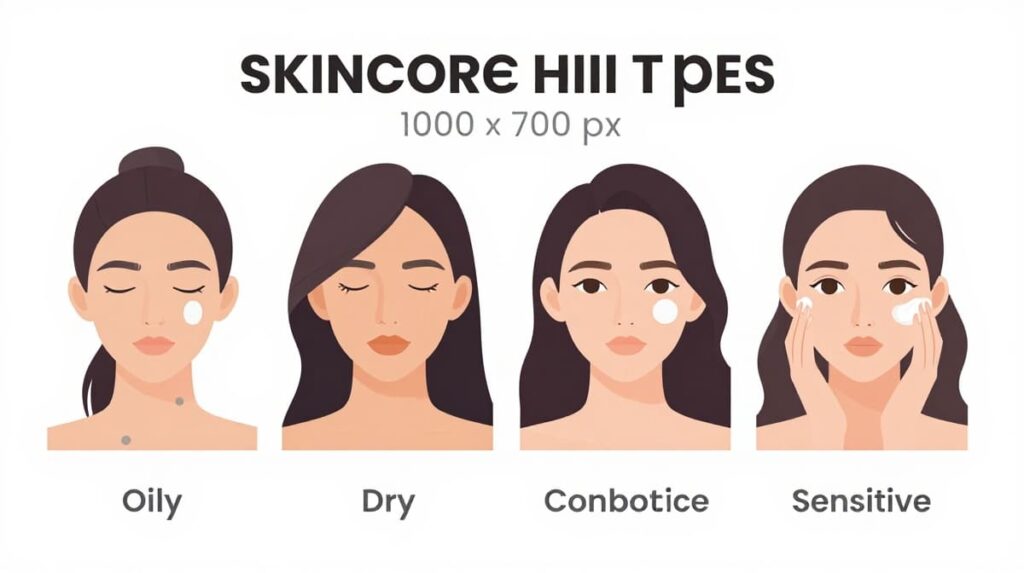
SKIN TYPE SELECTION GUIDE
Oily / Acne-Prone Dry / Dehydrated Sensitive Skin
+——————+ +——————+ +——————+
| Gel / Fluid base | | Cream / Lotion | | Mineral / Zinc |
| Matte Finish | | Hyaluronic Acid | | Fragrance-Free |
| Non-Comedogenic | | Nourishing Oils | | Soothing Actives |
+——————+ +——————+ +——————+
1. Oily and Acne-Prone Skin
Look for oil-free, non-comedogenic gel or fluid formulas with a matte or natural finish. Ingredients like silica or niacinamide can help absorb excess sebum throughout the day. If you struggle with active breakouts, explore specialized skincare for acne-prone skin that combines lightweight hydration with sun defense.
2. Dry and Mature Skin
Dry skin thrives with moisturizing cream-based sunscreens rich in hydrating ingredients such as hyaluronic acid, glycerin, and ceramides. These formulas restore moisture loss while shielding against environmental stressors. Pairing your sun protection with an anti-aging regimen or retinol for beginners at night helps maintain a supple, youthful complexion.
3. Sensitive and Reactive Skin
If your skin is prone to redness, rosacea, or eczema, mineral (physical) sunscreens featuring zinc oxide are your best choice. Zinc oxide is inherently soothing and far less likely to cause irritation or stinging compared to chemical filters.
4. Combination Skin
Combination skin benefits from lightweight fluid lotions or hydrating milk textures that deliver balanced moisture to dry areas without suffocating the T-zone.
Image Details: File: best-sunscreen-for-skin-types.webp | Dimensions: 1000×700 (10:7) | Alt: Best sunscreen for oily dry sensitive and acne-prone skin AI Prompt: Create a skincare infographic (1000 × 700 px, 10:7 aspect ratio) showing four skin types: oily, dry, combination and sensitive skin with suitable sunscreen textures like gel, lotion and cream. Modern flat illustration.
Mineral vs. Chemical Sunscreen: Which Is Right for You?
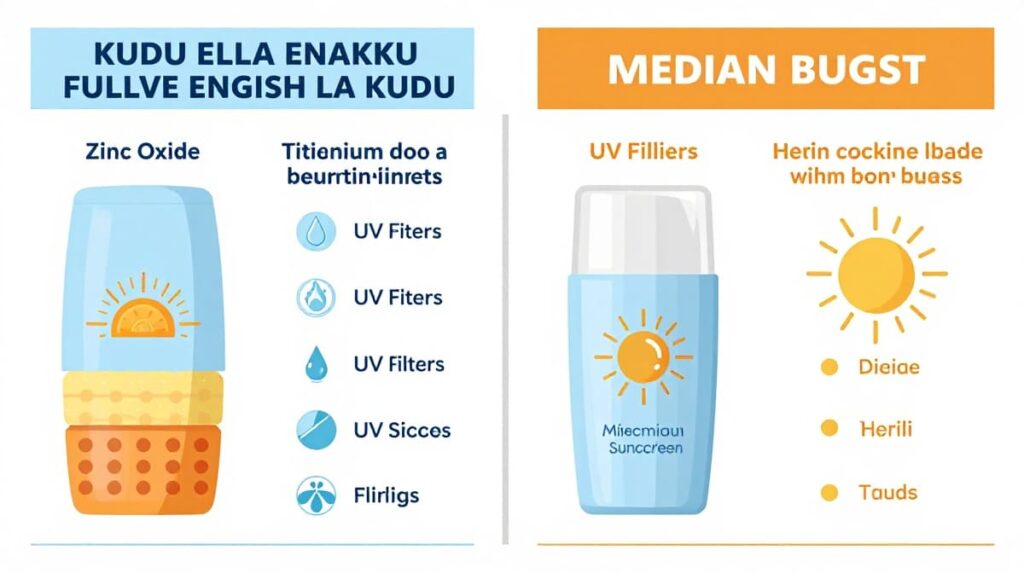
When choosing the best sunscreen for daily use, you will encounter two main formulation categories: Mineral (Physical) and Chemical. Both offer effective broad-spectrum protection, but they work through different mechanisms.
| Feature | Mineral Sunscreen | Chemical Sunscreen |
| Active Ingredients | Zinc Oxide, Titanium Dioxide | Avobenzone, Octisalate, Octocrylene |
| How It Works | Sits on top of skin; reflects & scatters UV rays | Absorbs into skin; converts UV rays into heat |
| Onset of Action | Works immediately upon application | Requires 15–20 minutes to become effective |
| Texture & Finish | Can be thicker; may leave a light white cast | Lightweight, invisible, blends easily |
| Best For | Sensitive skin, post-treatment, children | Active outdoor use, invisible daily wear under makeup |
According to U.S. Food and Drug Administration (FDA) sunscreen guidelines, mineral ingredients like zinc oxide and titanium dioxide are recognized as safe and effective (GRASE). However, modern chemical filters offer superior wearability and an invisible finish across all skin tones. Choose the type that aligns best with your daily lifestyle and texture preferences.
Image Details: File: mineral-vs-chemical-sunscreen.webp | Dimensions: 1000×700 (10:7) | Alt: Difference between mineral and chemical sunscreen AI Prompt: Create a side-by-side comparison infographic (1000 × 700 px, 10:7 aspect ratio) showing mineral sunscreen versus chemical sunscreen. Include zinc oxide, titanium dioxide, UV filters, skin layers and simple icons.
Beneficial Ingredients to Look For (and What to Avoid)
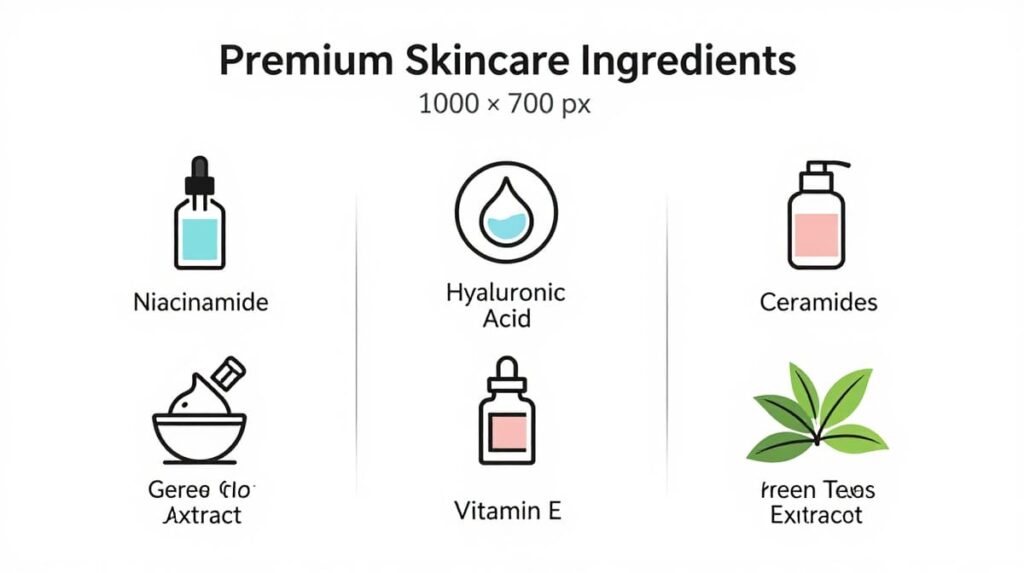
Today’s high-performance sunscreens do double duty as active skincare products. When shopping for the best sunscreen for daily use, look for multi-tasking ingredients that enhance skin health:
- Niacinamide (Vitamin B3): Calms redness, regulates oil production, and repairs the skin barrier.
- Hyaluronic Acid: Attracts moisture to keep skin plump throughout the day; learn more in our detailed hyaluronic acid guide.
- Antioxidants (Vitamin C & E): Neutralize free radicals generated by UV rays and pollution. Using sunscreen alongside vitamin C serum benefits provides enhanced photoprotection.
- Ceramides: Reinforce the natural moisture barrier to prevent transepidermal water loss.
BENEFICIAL SUNSCREEN ACTIVES
[ Niacinamide ] –> Calms & Regulates Oil
[ Hyaluronic ] –> Deep Hydration
[ Vitamin C/E ] –> Antioxidant Defense
[ Ceramides ] –> Barrier Support
Ingredients to Avoid (For Sensitive Types)
If you have easily irritated skin, consider avoiding high concentrations of synthetic fragrances, denatured alcohol (which can dry out the barrier), and heavy pore-clogging silicones.
Image Details: File: best-sunscreen-ingredients.webp | Dimensions: 1000×700 (10:7) | Alt: Top sunscreen ingredients for healthy skin AI Prompt: Create a premium skincare ingredients infographic (1000 × 700 px, 10:7 aspect ratio) featuring Niacinamide, Hyaluronic Acid, Ceramides, Vitamin E and Green Tea Extract with elegant icons and cosmetic style.
5 Common Sunscreen Mistakes That Cause Skin Damage
Even if you buy the best sunscreen for daily use, incorrect application can severely compromise its effectiveness. Avoid these five common pitfalls:
- Applying Too Little Product: Most people apply only half the recommended amount. For your face and neck, use the “two-finger rule”—extending two full strips of sunscreen along your index and middle fingers.
- Forgetting Key Areas: Eyelids, ears, the back of the neck, hairline, and the tops of hands are frequently missed spots vulnerable to sun damage.
- Skipping Reapplication: Sunscreen filters break down over time and with exposure to light. Reapply every two hours when outdoors, or after swimming and sweating.
- Relying Solely on SPF Makeup: Foundations or powders with SPF rarely provide adequate protection because you would need to apply heavy layers to reach the stated SPF rating.
- Ignoring Sun Protection on Cloudy or Winter Days: Up to $80\%$ of UV radiation penetrates cloud cover. Consistent daily wear is necessary year-round.
Image Details: File: common-sunscreen-mistakes.webp | Dimensions: 1000×700 (10:7) | Alt: Common sunscreen application mistakes AI Prompt: Create an educational infographic (1000 × 700 px, 10:7 aspect ratio) illustrating common sunscreen mistakes including too little product, missing ears, not reapplying, forgetting neck and hands. Use clear checkmarks and warning icons.
How to Incorporate Sunscreen into Your Daily Skincare Routine
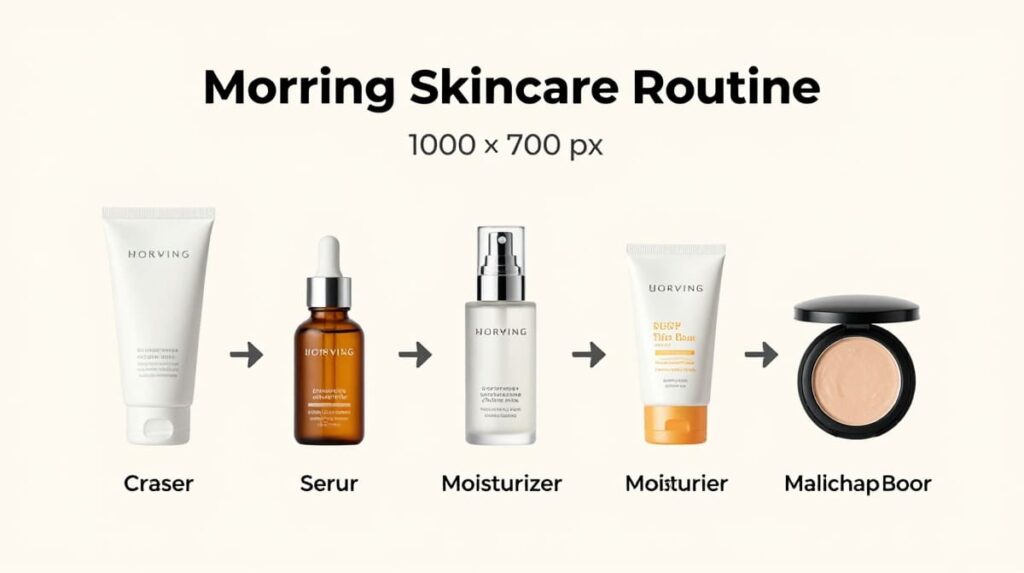
To get the most out of your products, apply them in the correct order. Sunscreen should always be the final step in your morning skincare regimen, before applying any cosmetic makeup.
MORNING SKINCARE ORDER
1. Cleanser ──> 2. Serum ──> 3. Moisturizer ──> 4. SUNSCREEN ──> 5. Makeup
Step-by-Step Daily Sequence:
- Cleanse: Wash your face with a gentle cleanser.
- Treat: Apply targeted treatments, such as antioxidant serums.
- Moisturize: Apply a light moisturizer to seal in hydration. (If using a hydrating sunscreen, you can combine step 3 and 4).
- Protect: Apply a generous layer of the best sunscreen for daily use to your face, ears, and neck. Allow 3–5 minutes for it to form a protective film before applying makeup.
- Nighttime Cleanse: In the evening, use a thorough cleaning technique like our double cleansing guide to remove all traces of SPF and stubborn dirt.
Image Details: File: morning-skincare-routine-with-sunscreen.webp | Dimensions: 1000×700 (10:7) | Alt: Morning skincare routine with sunscreen AI Prompt: Design a modern morning skincare routine infographic (1000 × 700 px, 10:7 aspect ratio) showing cleanser, serum, moisturizer, sunscreen and makeup in sequence with clean minimalist beauty style.
Long-Term Benefits of Wearing Sunscreen Every Day
Consistency is where real skin transformations happen. A long-term clinical National Center for Biotechnology Information study on photoaging demonstrated that individuals who used broad-spectrum SPF daily showed no detectable skin aging over a four-year period compared to irregular users.
Key long-term benefits include:
- Prevention of Hyperpigmentation: Stops dark spots and melasma from darkening. If you already have uneven tone, check our guide on treating hyperpigmentation.
- Preservation of Collagen: Keeps skin firm, elastic, and youthful for longer.
- Protection of the Skin Barrier: Prevents chronic inflammation and promotes ongoing skin barrier repair.
- Significant Reduction in Cancer Risk: Daily SPF 15+ use reduces the risk of developing squamous cell carcinoma by $40\%$ and melanoma by $50\%$, according to Centers for Disease Control and Prevention (CDC) sun safety advice.
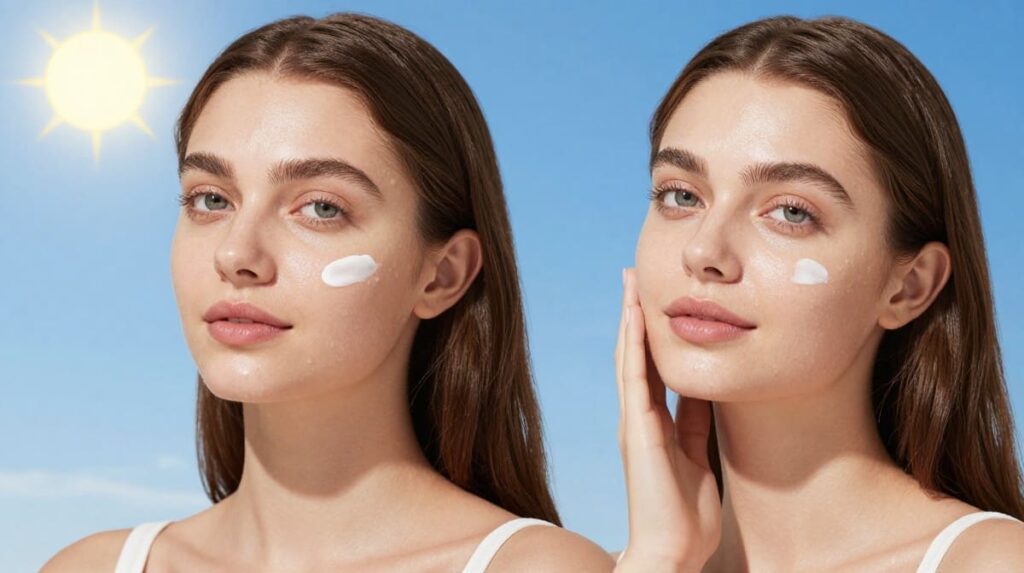
Image Details: File: healthy-skin-with-daily-sunscreen.webp | Dimensions: 1000×700 (10:7) | Alt: Healthy glowing skin after daily sunscreen use AI Prompt: Create a realistic skincare lifestyle image (1000 × 700 px, 10:7 aspect ratio) showing healthy glowing skin protected by sunscreen with sunshine, blue sky, hydration effects and youthful appearance.
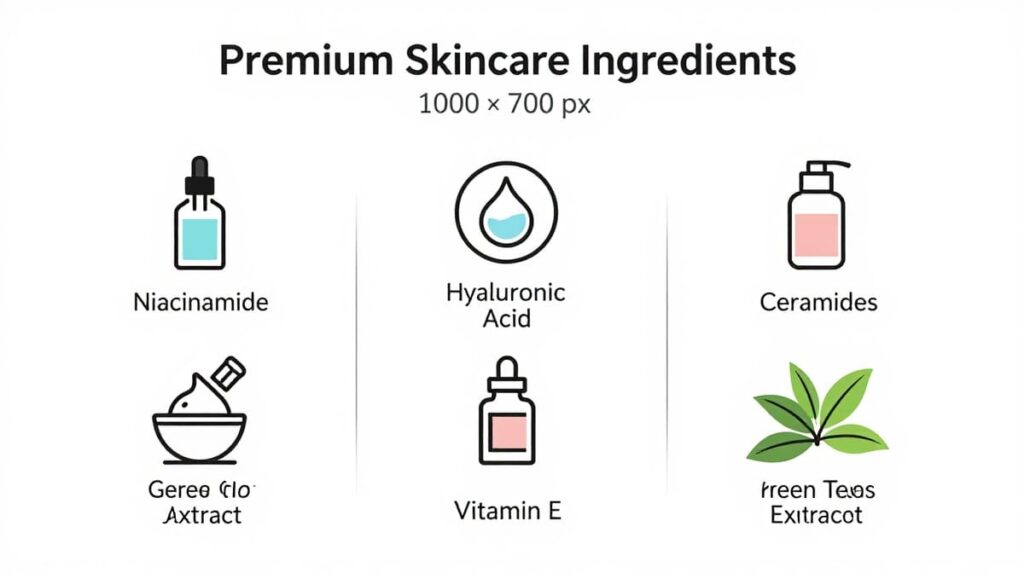
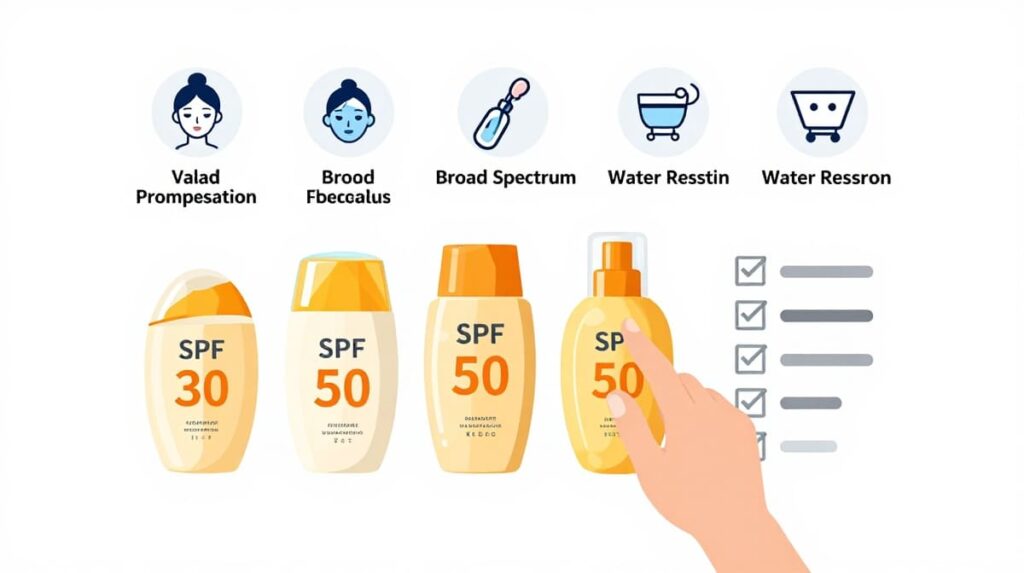
Image Details: File: how-to-choose-best-sunscreen.webp | Dimensions: 1000×700 (10:7) | Alt: How to choose the best sunscreen for daily use AI Prompt: Create a clean educational illustration (1000 × 700 px, 10:7 aspect ratio) showing a person comparing sunscreen bottles labeled SPF 30, SPF 50, Broad Spectrum and Water Resistant with skincare icons and shopping checklist.
Frequently Asked Questions (FAQs)
1. Should I wear sunscreen indoors or on rainy days?
Yes. UVA rays penetrate cloud cover and standard window glass. If you sit near windows or work in bright indoor spaces, daily protection remains necessary.
2. Can I skip moisturizer if my sunscreen is hydrating?
Absolutely! Many modern daily sunscreens are formulated with nourishing ingredients like hyaluronic acid and glycerin, serving as a 2-in-1 moisturizer and sunscreen.
3. How do I reapply sunscreen over makeup during the day?
You can reapply using SPF setting sprays, compact mineral powders with SPF, or by gently pressing a sunscreen cushion/sponge over your makeup.
4. Is SPF 30 enough for daily use?
Yes, SPF 30 blocks approximately $97\%$ of UVB rays, which dermatologists consider the ideal threshold for everyday incidental exposure.
Final Thoughts
Finding the best sunscreen for daily use comes down to understanding your skin type and committing to daily application. By picking a broad-spectrum SPF 30 or SPF 50 formula that feels lightweight and comfortable, you preserve your skin’s health, youthful texture, and vibrant glow for years to come.
Additional SEO & Technical Recommendations
| SEO Element | Implementation Status | Recommended Action |
| Structured Data (Schema) | Recommended | Implement FAQPage and Article JSON-LD schema to increase eligibility for rich snippets in Google search results. |
| Open Graph (OG) Tags | Recommended | Set up custom OG image, title, and description tags for Facebook, X (Twitter), and Pinterest sharing. |
| Image Compression | Recommended | Convert all 10 images to modern .webp or .avif formats at $80\%$ quality to optimize Core Web Vitals (LCP). |
| Internal Silo Strategy | Recommended | Add reciprocal internal links pointing back to this guide from high-traffic articles on skincare routines and ingredient breakdowns. |